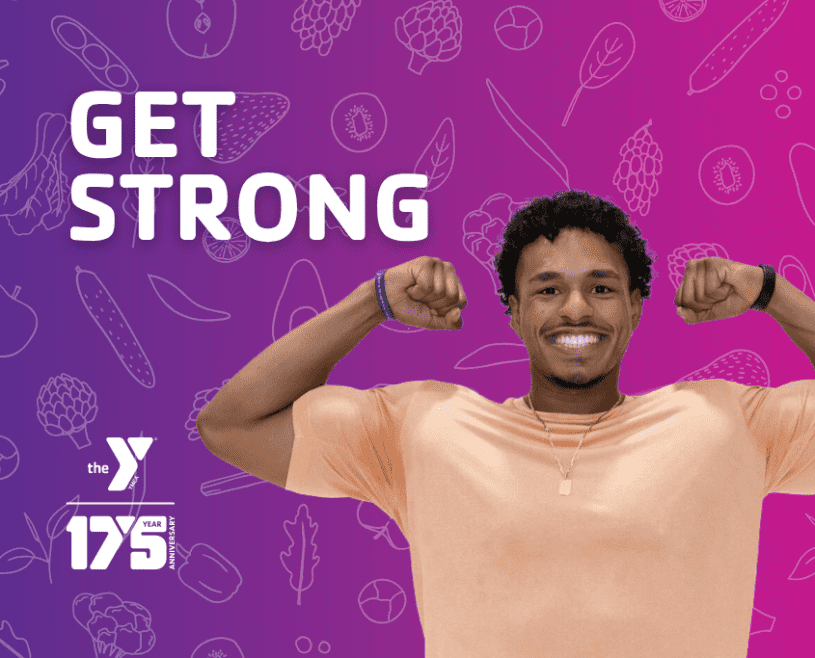
At the Y, getting strong isn’t just about lifting weights—it’s about caring for your mind, body, and spirit. How you fuel yourself is a key part of that journey. Healthy nutrition helps you stay energized, focused, and ready to ‘Get Strong’ every day.
Power Your Body
Balanced meals that combine protein, complex carbohydrates, and healthy fats can help you feel stronger, more energized, and ready to take on everything from workouts to daily responsibilities.
- Lean proteins like chicken, fish, beans, tofu, and Greek yogurt to support muscle strength and repair
- Whole grains such as oats, brown rice, and quinoa for steady, sustained energy throughout your day
- Fruits and vegetables to provide essential vitamins, minerals, and antioxidants that keep your body functioning at its best
- Healthy fats like avocado, nuts, seeds, and olive oil to support heart health, brain function, and lasting fullness
- Hydration—especially water—to help regulate energy levels, improve performance, and aid recovery
Even small adjustments—like adding an extra serving of vegetables to lunch, choosing whole grains at dinner, or staying mindful of your hydration—can make a meaningful difference over time.
Nourish Your Mind
Balanced nutrition supports focus, memory, and emotional well-being—helping you stay sharp, present, and resilient throughout your day.
- Fatty fish like salmon and tuna, rich in omega-3s that support brain health and cognitive function
- Berries and colorful fruits packed with antioxidants that help protect and support brain performance
- Whole grains such as oats, brown rice, and whole wheat for steady energy and improved concentration
- Nuts and seeds that provide healthy fats and nutrients linked to memory and mental clarity
- Dark chocolate (in moderation) to support mood and focus
- Hydration—especially water—to help maintain concentration, energy, and overall brain function
Fueling your mind consistently can help you feel more focused, balanced, and ready to take on both everyday tasks and long-term goals.
Even small changes—like swapping processed snacks for whole foods or staying hydrated throughout the day—can make a meaningful impact on your mental clarity and overall well-being.
Lift Your Spirit Through Meals
Sharing meals with loved ones, exploring new healthy recipes, or cooking together can lift your spirit and strengthen connections.
In fact, research shows that people who share frequent family meals tend to have stronger social connections, higher self-esteem, and lower levels of stress and depressive symptoms (source).
Practicing mindful eating—taking time to savor your food—can help you feel more satisfied and attuned to your body’s needs. Even simple routines, like sitting down for dinner without distractions or trying a new recipe together, can make a meaningful difference in your overall well-being.
Get Strong in the Kitchen
The YMCA of Central Florida makes healthy eating simple and fun. Our Healthy Recipes for Meals and Snacks collection is full of nutritious ideas for every member of the family. From energizing breakfasts to protein-packed dinners and smart snacks, you can discover recipes that align with your goals and lifestyle.
👉 Explore our recipes: Healthy Recipes for Meals and Snacks
Strength Through Consistency
Just like building strength at the Y, cultivating healthy eating habits requires consistency. Choosing nourishing meals and snacks every day supports your physical health, mental clarity, and overall sense of well-being. When you care for your mind, body, and spirit consistently, you grow stronger in every way—inside and out.
Get Strong with Memberships Starting at $35/Month
Our Base Membership starts at just $35/month, providing access to fitness essentials, welcoming spaces, and a community that cares.
Your health is worth it.
References
- Fulkerson, J. A., Larson, N., Horning, M., & Neumark-Sztainer, D. (2014). Food preparation and family meals: Associations with dietary intake and quality. Public Health Nutrition, 17(6), 1323–1332. https://www.ncbi.nlm.nih.gov/pmc/articles/PMC6309329/