Drowning Prevention Starts Here
In a place like Central Florida—surrounded by pools, lakes, and beaches—water is part of everyday life. But it also brings real risk. Florida loses more children under the age of 5 to drowning than any other state in the nation, and most tragedies happen quickly and quietly, often when adults are nearby.
- 88% of children who drown were under adult supervision
- Drowning is the 2nd leading cause of death for kids ages 5 to 14
- In Florida, drowning is the leading cause of death for children with autism. They are 160x more likely to drown than their neurotypical peers, with over 30 deaths reported in early 2025.
These numbers are difficult, but they point to something powerful: with the right tools, awareness, and skills, drowning can be prevented.
At the YMCA of Central Florida, we are leading the way in water safety education for our community. From swim lessons that can reduce drowning risk by up to 88% for young children, to hands-on programs and safety resources, we are committed to making sure every child has the opportunity to be safe and confident in and around the water.
This page is your resource for water safety—filled with the knowledge, skills, and simple actions that can help protect the people you love.
Because together, we can make sure not one more child is lost to drowning.
Go To YMCA Swim Lessons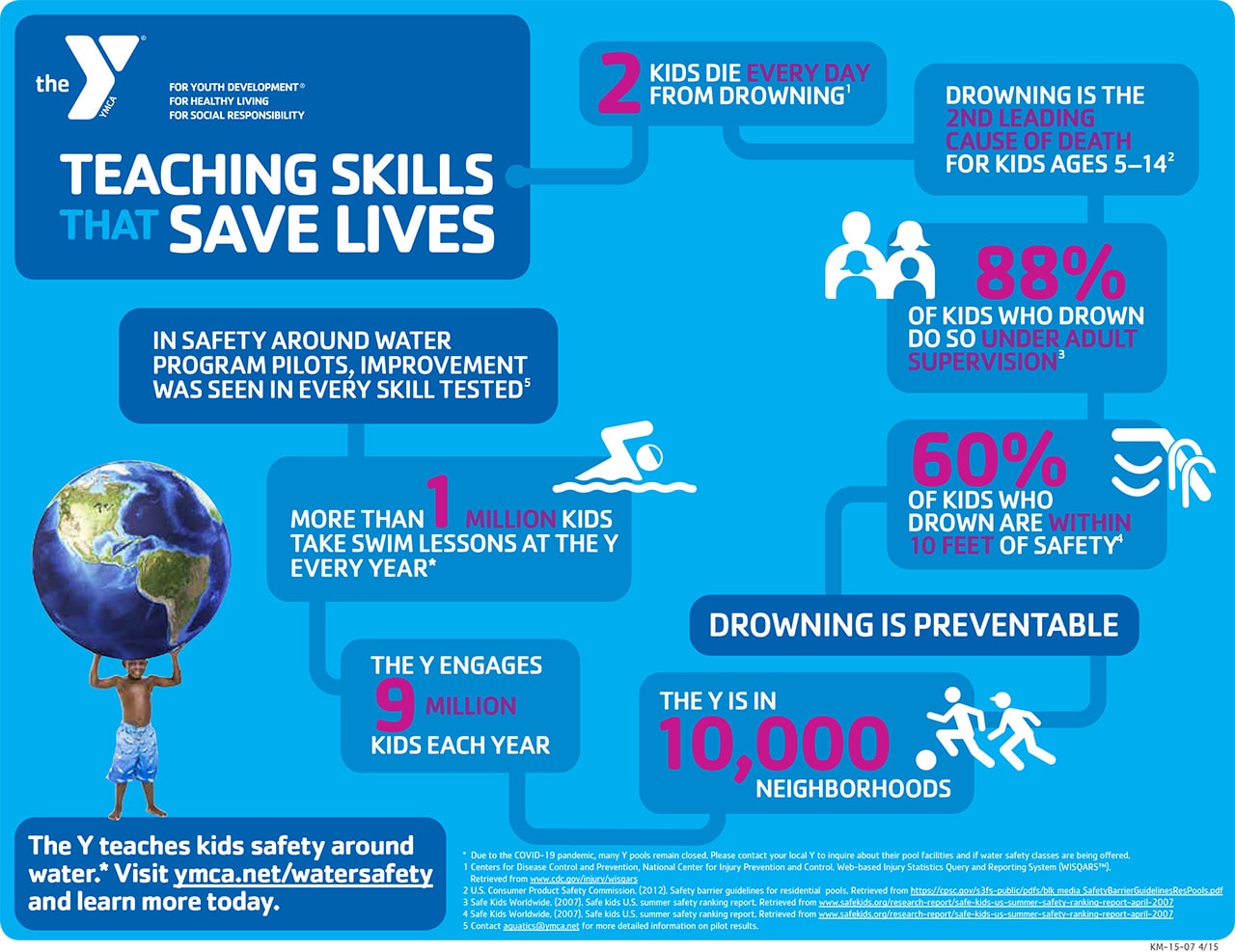
Phones Down, Eyes Up

Checking your phone may seem like a quick task, but those few seconds of distraction can add up. And distractions around water can lead to serious, even fatal, consequences. In fact, 88% of children drown with at least one adult present.
That’s why families must designate a Water Watcher—an adult who stays focused and free from distractions like phones, conversations, or alcohol who can maintain constant visual contact with all children in or near the water.
Remember: Phones Down, Eyes Up while at the pool, lakefront, or ocean.
Pledge to Be a Water Watcher

I pledge to be a #WaterWatcher and help keep kids safe in and around water.
| I will: | Designate a Water Watcher every time children are in or near water |
| I will: | Keep my eyes on the water |
| I will: | Avoid distractions like talking on the phone, socializing, or reading while watching children |
| I will: | Keep a phone nearby for emergencies |
| I will: | Remain by the water until relieved by a new water watcher |
Sign the Water Watcher Pledge

Test, Mark, Protect
At the YMCA of Central Florida, the Test, Mark, Protect system is used across all of our locations to help keep children in our programs safe in and around the water.
Through a free swim assessment and a simple color-coded wristband system, we’re able to match each child’s swim ability with the appropriate level of pool access and supervision every time they swim.
Safety Around Water Program
The YMCA’s Safety Around Water (SAW) program is a grant-funded initiative focused on reducing drowning risks by equipping children with essential water safety skills. Through partnerships with local schools and community organizations, the Y provides free swim lessons to children who need them most—helping ensure that water safety is accessible, not a privilege. Because the program is funded through these partnerships, SAW lessons are not available for public registration.

Whether your child is near a pool, lake or beach, the most effective way to protect them is to set up multiple layers of defense around the water.
Layers of Protection:
Avoid Water Wings
Don’t use air-filled swimming aids like water wings in place of life jackets or life preservers. Using air-filled swimming aids can give parents and children a false sense of security, which may increase the risk of drowning. These air-filled aids are toys and aren’t designed to be personal flotation devices as they can deflate if they become punctured or unplugged.
These safeguards apply at home and while visiting family, friends or public spaces.
Water Safety Videos

Designate a Water Watcher
Remain at a Safe Distance
Post-swimming Reminders
Look Before You Leap
Swim Stroke Guides
Our YMCA Aquatics team has put together dry-land home activities—no pool required! These home activities help to develop good form and build stamina. When the skill has been mastered on land, it becomes easier to perform in the water.
-
Front Glide
Download Guide -
Front Crawl
Download Guide -
Swim on Front
Download Guide -
Back Glide
Download Guide -
Back Float
Download Guide -
Dive
Download Guide -
Submerge
Download Guide -
Sidestroke
Download Guide -
Flip Turn
Download Guide -
Butterfly
Download Guide
Save Lives Through Water Safety
At the Y, our Safe Start program teaches infants as young as 6 months essential water survival skills, including how to roll, float, and breathe. These simple but critical abilities can save lives. Last year alone, 229 children gained these life-saving skills through our program.
As a nonprofit, we depend on the generosity of our community to make these lessons accessible to families who might not otherwise afford them.
Your gift makes this possible.
Because of supporters like you, more children in our community are learning how to protect themselves before they can even speak.
Your $95 Donation
Provides one week of Safe Start swim lessons
Your $285 Donation
Provides three weeks of Safe Start swim lessons
Your $570 Donation
Provides six weeks of Safe Start swim lessons
Water Safety Articles:
- Water Safety for Kids: How the YMCA’s Test, Mark, Protect System Keeps Swimmers Safe
 Learn how the YMCA of Central Florida’s swim assessments and color-coded wristband system work together to keep children safe in… Read more: Water Safety for Kids: How the YMCA’s Test, Mark, Protect System Keeps Swimmers Safe
 - Phones Down, Eyes Up!At the YMCA, we believe that water safety starts with awareness—and that every parent and caregiver can be a hero when it comes to preventing drowning.
- The Importance of Water Safety for Households with Autistic ChildrenOver the last 10 years, the number of children diagnosed with autism spectrum disorder has increased significantly worldwide. (^1) According… Read more: The Importance of Water Safety for Households with Autistic Children
- Water Safety Tips for FamiliesWith sunny days and warmer weather rolling in, it’s the perfect time to splash around and have fun in the… Read more: Water Safety Tips for Families
- Five Essential Water Safety Tips To KnowAs temperatures rise, kids want to cool off, whether that’s in pools, ponds, lakes, rivers, streams, or oceans. Unfortunately, that… Read more: Five Essential Water Safety Tips To Know